
Radon Testing
What Is Radon Testing?
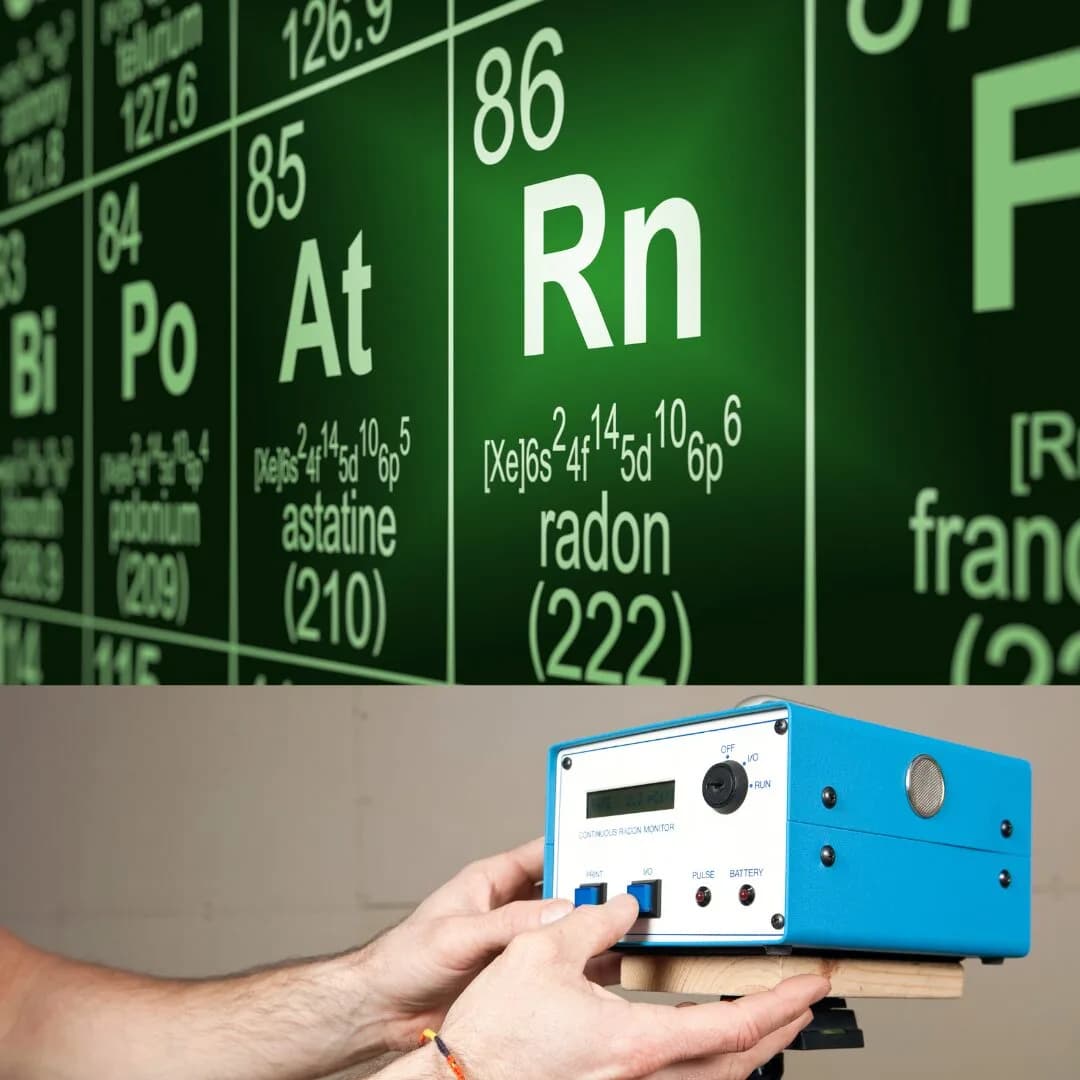
Radon testing measures the concentration of radon gas inside a home over a specific period.
Radon is a naturally occurring radioactive gas produced by the breakdown of uranium in soil and rock. It has no color, odor, or taste, so its presence cannot be identified during a standard visual home inspection. Testing is the only way to determine the radon level inside a particular home.
Radon can enter through openings around foundations, floor slabs, sump pits, utility penetrations, and other pathways between the building and the surrounding soil. It can accumulate in any type of home—new or old, with or without a basement.
We dig deep, you rest easy.
Why Radon Testing Matters
Long-term exposure to elevated radon levels increases the risk of lung cancer. Radon concentrations can vary significantly between neighboring properties, so the results from one home cannot predict the level inside another.
A newly constructed home can also have elevated radon, even when it contains a passive radon-control system or other radon-resistant construction features. These features may help reduce radon entry, but they do not confirm the actual indoor concentration. The home must still be tested.
What to Expect During Radon Testing
A professional continuous radon monitor is placed on the lowest level of the home that is suitable for regular occupancy. This may include a finished or potentially occupiable basement, even when it is not currently being used as a bedroom or living area.
The monitor remains in place for a minimum of 48 hours, continuously measuring the radon concentration and recording important testing conditions.
Closed-building conditions should generally begin at least 12 hours before the monitor is placed and must be maintained throughout the testing period. Windows should remain closed, and exterior doors should only be opened for normal entry and exit. The home’s heating and cooling system may operate normally, but equipment that intentionally brings outside air into the home should not be used.
After the monitoring period, the equipment is retrieved and the recorded data is reviewed. You will receive a separate professional report showing the average radon concentration in picocuries per liter of air (pCi/L), together with guidance based on the reported results.
Understanding the Results
Radon is measured in picocuries per liter of air, shown as pCi/L.
The U.S. Environmental Protection Agency recommends taking action to reduce radon when the measured concentration is 4.0 pCi/L or higher. The EPA also recommends considering radon reduction when results fall between 2.0 and 4.0 pCi/L.
If elevated levels are reported, consultation with a qualified radon-mitigation professional is recommended. Radon concentrations can typically be reduced through a properly designed and installed mitigation system.
Schedule Radon Testing
Radon cannot be detected by sight, smell, or a standard home inspection. Whether you are purchasing a property or evaluating the home where you already live, professional testing gives you the information needed to make an informed decision.
Radon testing may be added to a qualifying residential inspection or scheduled as a standalone service, depending on the property location.
Ready to book?
Pick a time online in under a minute. Questions first? Call our 24/7 AI quote & scheduling agent at (202) 831-3889.
See all inspection services